
From Career Changer to Certified Caregiver: A Step-by-Step Roadmap for 2026

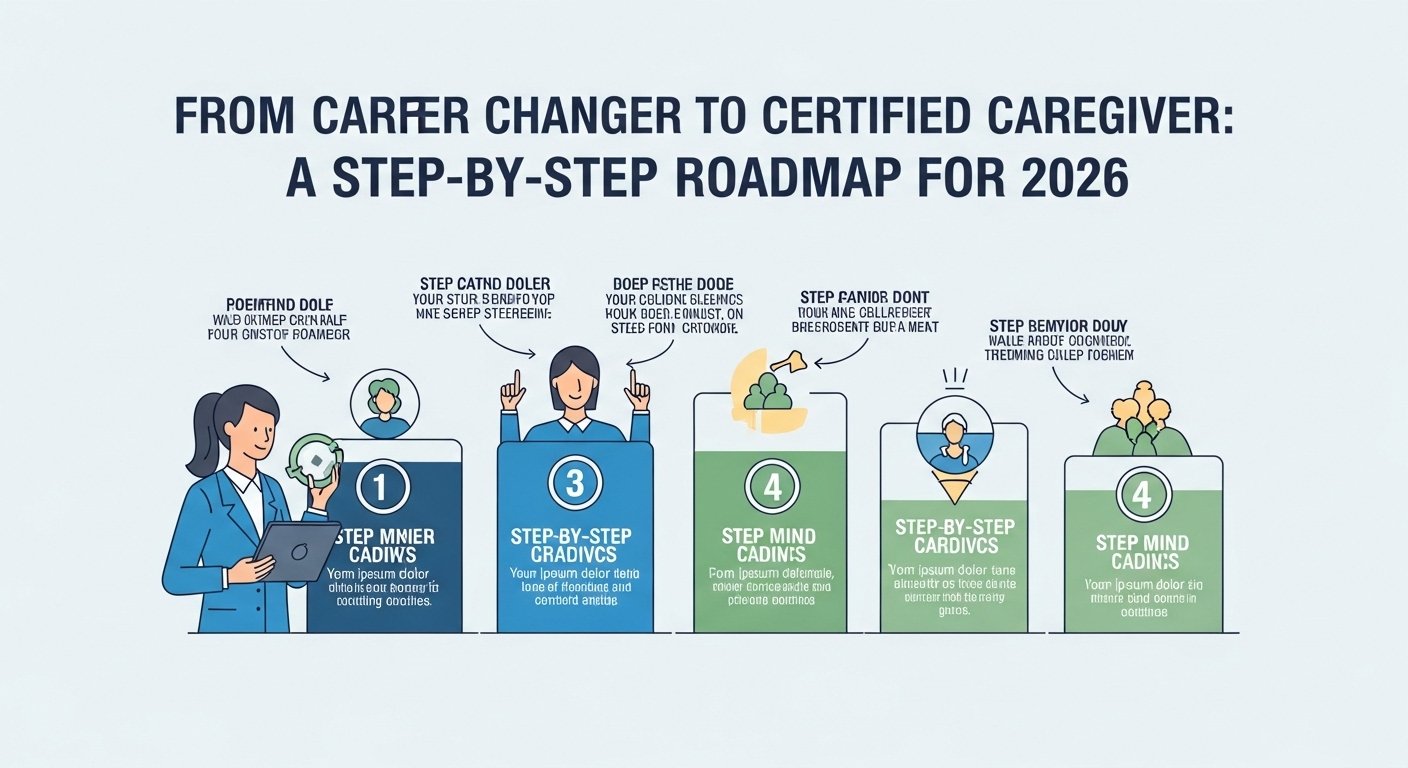
Changing careers is one of the most significant decisions a person can make — and it comes with real anxiety. But for those considering a move into professional caregiving, the path is more accessible, affordable, and rewarding than you might expect.
This step-by-step roadmap is designed for professionals from any background who are ready to transition into the caregiver field — whether you’re leaving retail, education, hospitality, office work, or any other industry.
Why Caregiving Is an Ideal Career Change Destination
Before the roadmap, it’s worth naming why caregiving is such a compelling career change — especially in 2026:
- Massive and growing demand: 900,000+ new caregiving jobs projected by 2032
- Fast credential timeline: Get trained and employed in as little as 6–8 weeks
- Low financial barrier: Full certification from $64.99 vs. years of tuition elsewhere
- Transferable humanity: Skills from teaching, hospitality, customer service translate directly
- Genuine purpose: One of the highest-meaning career choices available
- Remote from automation: Caregiving requires human connection that technology cannot replace
These factors make caregiving one of the best-positioned career paths for mid-career changers in the current economy. The National Caregiver Organization was specifically built to make this transition as smooth and accessible as possible.
The 7-Step Roadmap
Step 1: Clarify Your Caregiving Goal
Before selecting a training program, decide what kind of caregiving you want to do and in what setting:
- Do you prefer working one-on-one in private homes?
- Are you comfortable with agency oversight and protocols?
- Are you interested in eventually pursuing a nursing license?
- Do you want to start part-time while finishing your current job?
Your answers will direct you to the right credential — PCA, HHA, DCW, PCW, or CNA Exam Prep.
Step 2: Choose Your Training Program
Select a course that aligns with your goal and timeline. For most career changers:
If entering quickly: PCA or DCW courses at $64.99 are the fastest and most affordable.
If targeting agency employment: The HHA course ($99.99) is the most recognized credential for agency roles.
If targeting facility work: The CNA Exam Prep course ($119.99) is the comprehensive path to state licensure.
All NCOOA courses include free CPR and Basic First Aid training, one year of access, and unlimited test retakes. Explore the full catalog at ncooa.com.
Step 3: Build Your Study Schedule
Treat your training like a part-time commitment. Most NCOOA courses can be completed in 6 to 12 weeks at 5 to 10 hours of study per week. Use evenings, weekends, and any other available windows — there are no fixed class times.
Step 4: Complete the Course and Pass the Final Exam
Work through all modules systematically. NCOOA courses use video lessons and quizzes to reinforce learning. When you’re confident in your knowledge, attempt the final exam (minimum 80% to pass). With unlimited retakes, there’s no pressure — focus on genuine mastery, not just getting through.
Step 5: Receive Your Certificate
Pass your exam, and your Certificate of Completion will be emailed within 3 to 5 business days. This certificate serves as your primary credential when applying for caregiving positions.
Step 6: Apply for Your First Position
Begin your job search with your certificate in hand. Options include:
- Home care agencies in your area (search ‘[your city] home care agency hiring’)
- Online caregiver platforms (Care.com, CareLinx, Hometeam)
- Private family postings on community boards
- State Medicaid waiver programs, which fund in-home care for eligible clients
Highlight your certificate, your CPR training, and your relevant soft skills from prior experience. Many employers value reliability and communication skills as much as technical training.
Step 7: Plan Your Advancement Path
Day one in caregiving is not the end of the road — it’s the beginning. After 6–12 months of experience, most caregivers are ready to pursue the next credential level:
- PCA/DCW → HHA (gain agency-level skills)
- HHA → CNA Exam Prep (pursue state licensure)
- CNA → LPN program (clinical nursing pathway)
NCOOA’s Home Health Aide Online Course and CNA Online Exam Prep Course are natural stepping stones for caregivers who started in entry-level roles and want to build toward higher credentials.
What Former Career Changers Say
NCOOA students come from all backgrounds. Former teachers have found that their communication skills transfer immediately into client interactions. Former retail workers have noted that their customer service training helped them navigate difficult family dynamics. Former stay-at-home parents have leveraged their caregiving experience at home into paid professional roles with just a few weeks of online training.
The common thread: caregiving rewards people who are patient, present, and genuinely invested in the wellbeing of others — qualities that aren’t industry-specific.
Your New Career Starts Today
If this roadmap resonates with you, the next step is simple: visit ncooa.com, select the course that matches your goal, and enroll. You’ll have immediate access to your first lesson and could be holding your certificate in as little as 6 to 8 weeks. In a field that desperately needs skilled, compassionate caregivers — your timing could not be better.